Why does appendicitis happen in children?
Think of the appendix as a pen cap. One end is closed. The other end opens into the intestine and is the only way in and out.
If that opening gets blocked, normal secretions collect inside. Bacteria grow in the trapped fluid and the appendix becomes swollen and infected. The usual blocker is hardened stool, called a fecolith or appendicolith. The exact cause is not always clear. It is not caused by anything you did.
Constipation is often linked to appendicitis. With changing food habits and more junk food, constipation is rising among Indian children, and younger children are being affected. A fibre-rich diet, enough water and an active routine help prevent constipation. They may also lower the risk of appendicitis, although they cannot rule it out.
Signs parents notice
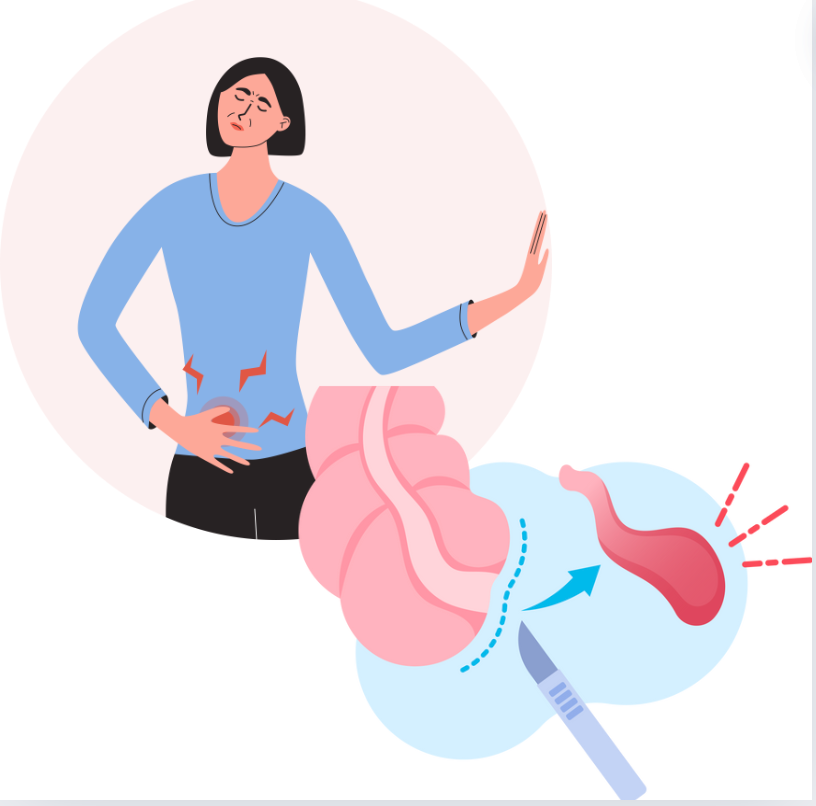
- Tummy pain that often starts around the belly button and then moves to the lower right side.
- Severe pain. Many children curl up and pull the knees to the chest, which gives a little relief.
- Fever, which is usually low grade early on.
- Vomiting or nausea, and sometimes loose stools.
- Loss of appetite. A child who refuses even a favourite food is a warning sign.
- Tenderness, and sometimes swelling, on the lower right side when the doctor presses.
- Passing urine often, in some children. An appendix lying low in the pelvis can irritate the bladder.
Other problems can look similar, such as gastroenteritis, a urine infection, constipation, and in boys testicular torsion. That is one reason an examination by a surgeon matters.
This is an emergency. Do not wait.
Go to a hospital the same day if your child has severe tummy pain that is getting worse, repeated vomiting, a swollen hard tummy, or refuses to walk or stand straight. A burst appendix is far more serious than an early one.
How appendicitis is diagnosed
It is never a simple sum. I look at three things together: the examination, the blood tests and the scan.
| Test | What it tells us |
| Examination | Fever, vomiting, the pain pattern and tenderness on the lower right side. |
| Blood tests | A white cell count (WBC) up to about 11,000 to 12,000 is acceptable. Counts of 16,000 to 20,000, or a very high CRP, point to significant infection. |
| Ultrasound | A widened appendix (8 to 10 mm or more), pus or fluid around it, a hint of impending rupture, or an appendicolith. |
When examination, blood tests and ultrasound agree, the diagnosis is definite. Ultrasound is usually the first scan. A CT scan is kept for unclear cases, because it involves radiation.
Does every child need surgery?
No. Suppose the appendix measures only 6 mm on ultrasound. The child has mild fever and one or two vomits. The WBC count is modestly raised, around 13,000, and the CRP is only slightly up. In such a child, treatment with medicines and close observation is reasonable. This also applies to a very mild, subacute appendicitis, often linked to a viral tummy infection or gastroenteritis.
The picture changes when the counts are clearly high, the symptoms are severe, and the ultrasound shows an appendix of 8 to 10 mm or more, pus, or fluid collection around it. Then surgery is the right treatment.
The appendicolith changes the decision
If the scan shows an appendicolith, I advise surgery even when symptoms are mild and counts are nearly normal. The stone is blocking the appendix and can lead to full appendicitis later.
How I decide
If all three findings are mild, medicines and watching are possible. If any one of them is severe, and the symptoms match the scan and blood tests, I advise surgery. In practice, surgery is advised when:
- appendicitis is confirmed on examination, blood tests and scan;
- symptoms are severe, even if the scan is not fully clear;
- the appendix has burst or an abscess has formed;
- an appendicolith is present.
Medicines first, then a planned operation
Many parents ask for treatment without surgery even when the disease is moderate or severe. That can be done, but with a condition attached.
In an appendicular mass, the inflamed appendix and the nearby loops of bowel clump together. Picture cooked noodles sticking together when they go cold. Operating at that stage can be difficult and risks injury to the intestines. So the child is given bowel rest, fluids through a drip and antibiotics to settle the infection. The older Ochsner–Sherren regimen followed the same idea. A similar approach can be used even in a moderate to severe case.
Medicines alone are not the end of treatment. The child needs an interval appendectomy, a planned operation after the infection settles, usually after about 6 to 8 weeks. Without it, appendicitis can return with equal severity, or the appendix can burst. Repeat attacks are common unless the appendix is removed.
Treatment with medicines does not always work
Conservative treatment can be tried in selected cases, but it will not always work. The disease may progress, and we may have to operate within the next 24 hours. So the decision is always based on your child’s clinical response and the severity of the disease.
What happens if appendicitis is not treated
- The appendix can burst, spreading infection through the tummy (peritonitis).
- A pus-filled abscess can form.
- The infection can enter the blood (sepsis), which is life-threatening.
The operation: laparoscopic appendectomy
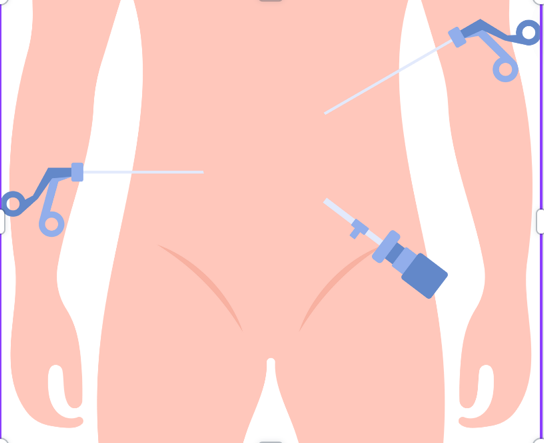
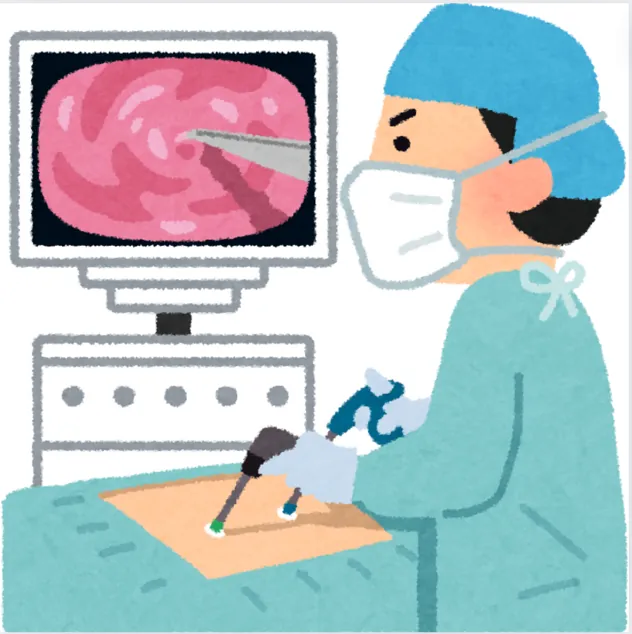
Surgery is usually laparoscopic. The surgeon works through a few small cuts using a camera, removes the appendix, and washes the tummy if there is pus. Keyhole surgery usually means less pain, small scars and a quicker recovery. It is the standard approach now.
Open surgery, through a larger cut on the lower right side, is kept for some burst or complicated cases, or if the keyhole approach has to be converted for safety. Your surgeon will explain this before the operation.