Pediatric Urology › Torsion of the testis
Testicular Torsion in Boys: Signs, Emergency Surgery and Recovery
Medically reviewed by Dr. Koushik Herle, MCh, DNB (Paediatric Surgery), Consultant Pediatric Surgeon and Pediatric Urologist, on 10 November 2026
Discovering that your son is in severe pain is frightening for any parent. When the pain is sudden and in the scrotum, the right information can save a testicle. Testicular torsion is a surgical emergency in which the testicle twists on its blood supply. This page explains the warning signs, why speed matters, how doctors tell torsion apart from other causes of scrotal pain, what the operation involves, and how recovery goes.
Go to the nearest emergency department now if a boy of any age has sudden, severe pain on one side of the scrotum, with or without vomiting. Do not wait for the pain to settle, do not give painkillers and wait, and do not book a routine clinic visit for the next day. If you already know a pediatric surgeon, phone the team on the way so they can prepare.
Key points for parents
- Torsion happens when the testicle rotates and twists the cord that carries its blood supply. It is most common in early adolescence (about 12 to 18 years) but can happen at any age, including newborns.
- Sudden, severe, one-sided scrotal pain is torsion until a doctor shows otherwise. Vomiting, a swollen tender scrotum and a testicle that sits high are common.
- The sooner the testicle is untwisted, the better the chance of saving it. Painkillers, ice or waiting do not restore blood flow.
- The treatment is an operation: the testicle is untwisted and fixed in place (orchidopexy). The other side is usually fixed in the same operation.
- A scan is helpful when it will not cause delay, but it should never hold up surgery when torsion is strongly suspected.
- Most boys, even those who lose a testicle, have normal puberty and normal fertility with the remaining one.
What is testicular torsion?
The testicle hangs in the scrotum on the spermatic cord, which carries its blood vessels, nerves and the tube that carries sperm. In torsion, the testicle rotates and the cord twists, like a stem twisting several times. Once it twists, blood cannot flow normally into and out of the testicle, and the tissue starts to suffer.
Doctors treat torsion as a time-critical emergency, in principle like a heart attack, because tissue needs blood to survive. If the blood supply is not restored soon enough, the testicle can be permanently damaged.
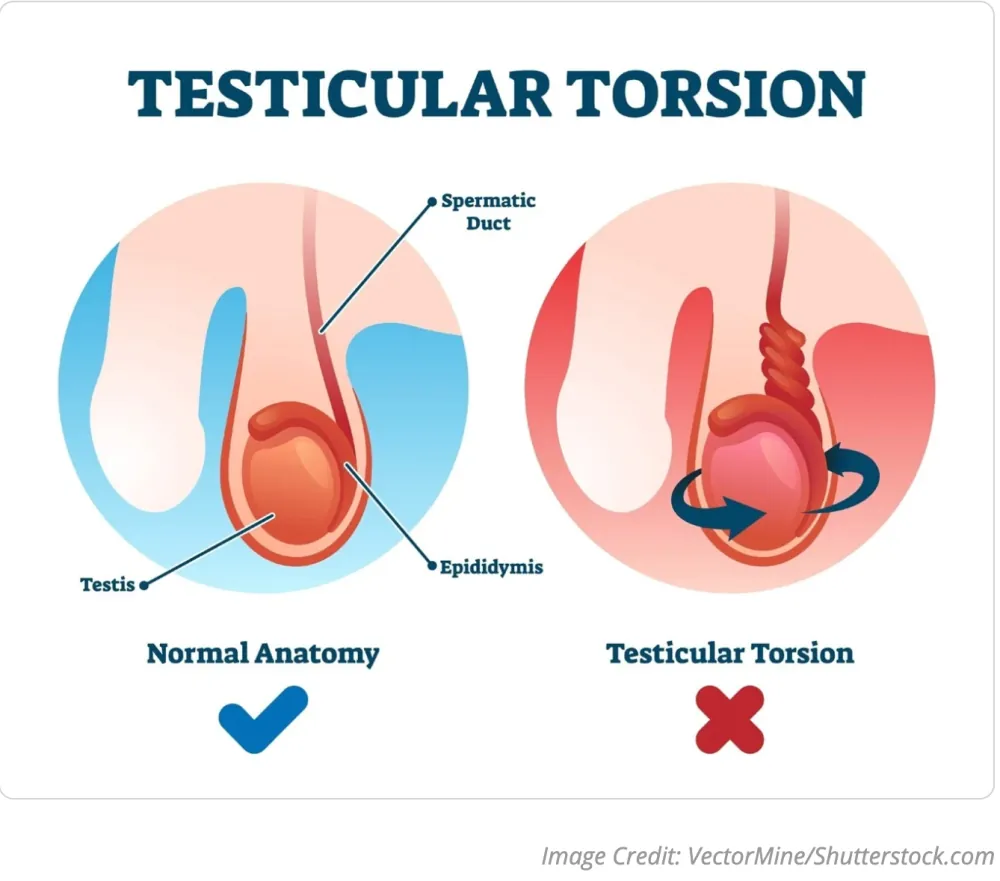
Image credit: VectorMine / Shutterstock.com
Why does it happen?
Before birth, each testicle develops inside the abdomen and travels down through the groin into the scrotum. The scrotum keeps the testicles a few degrees cooler than the body, which protects future fertility.
The most common reason for torsion in older children is a natural variation called the bell-clapper deformity. In these boys the testicle hangs more freely inside the scrotum, like the clapper inside a bell, so it can swing and rotate easily and twist its own cord.
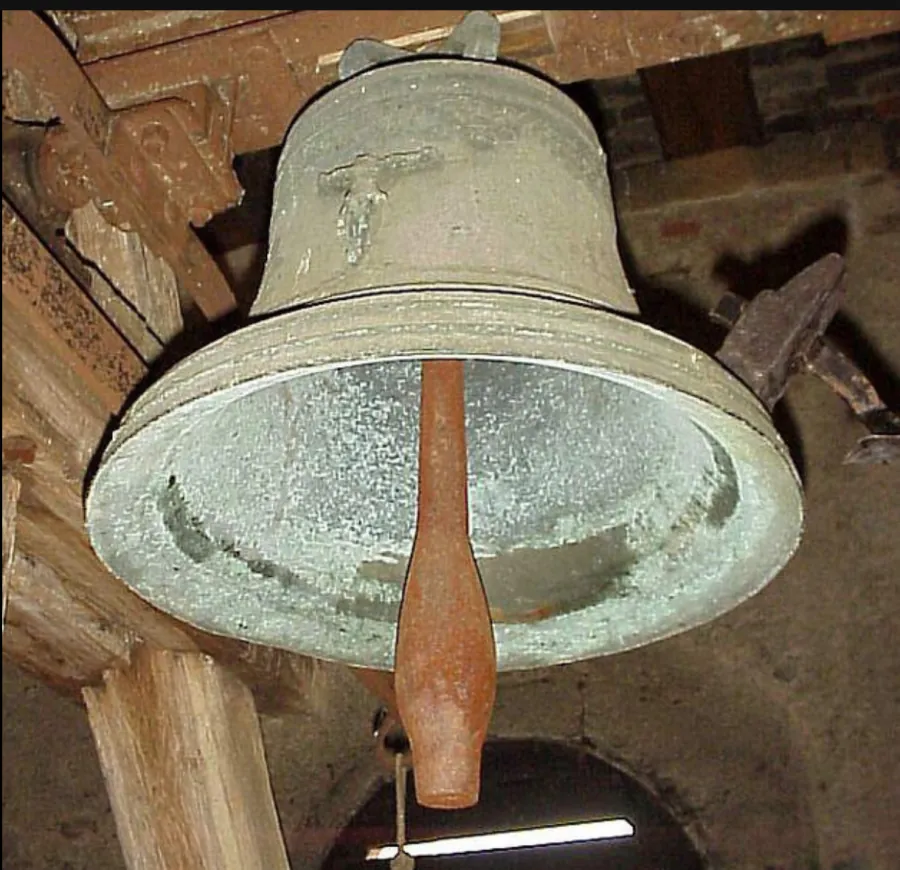
Most boys do not develop torsion because of sport, cycling or an injury. Many episodes start during sleep, on waking, or during normal daily activity. The bell-clapper deformity is usually present on both sides, which is why surgery usually secures both testicles.
Symptoms parents must not ignore
Any boy with sudden, severe pain on one side of the scrotum should be assumed to have torsion until a doctor proves otherwise.
- Sudden severe pain. The hallmark. It usually starts suddenly, affects one side, and reaches its worst within minutes.
- Swelling and redness. The affected side becomes larger, firm and tender.
- Nausea and vomiting. Severe pain triggers them. Scrotal pain with vomiting should raise even more suspicion.
- A high-riding testicle. The twisted cord shortens and pulls the testicle up, sometimes lying sideways.
- Trouble walking. Children walk bent over, hold the scrotum, or refuse to stand.
- Tummy or groin pain. Sometimes this is the first sign, because the nerves of the testicle also supply the lower abdomen. This can be mistaken for appendicitis or a stomach bug.
- Pain that comes and goes. The testicle can twist and untwist by itself (intermittent torsion). The child feels well again, but must still be seen urgently because the next episode may not settle.
Why every hour matters
When the cord twists, it acts like a tightly twisted garden hose. The veins that drain the testicle block first, causing swelling. As pressure rises, the artery also blocks. Without blood, cells are injured and tissue begins to die.
There is no exact deadline that applies to every child, but the sooner surgery is done, the better the chance of saving the testicle, and the chance is highest in the first few hours. Waiting until morning, or giving painkillers and hoping the pain settles, are common mistakes. Painkillers make a child comfortable. They do not restore blood flow.
How doctors tell torsion from other causes
Several conditions cause scrotal pain in children, and not all are emergencies. The surgeon relies on how the pain started, a focused examination and, when time allows, a colour Doppler ultrasound to check blood flow to the testicle.
| Feature | Testicular torsion | Epididymitis (inflammation) | Torsion of the appendix testis |
|---|
| Start of pain | Sudden, within minutes | Gradual, over hours to days | Sudden, usually milder |
| Usual age | 12 to 18 years (also infants) | Adolescents; younger boys after a urine infection | 7 to 12 years |
| Fever or urine symptoms | Usually absent | Often present | Usually absent |
| Cremasteric reflex | Usually absent on the affected side | Usually present | Usually present |
| Classic sign | High, horizontal testicle | Tender, swollen epididymis; relief on lifting the scrotum | “Blue dot” at the upper pole |
| Doppler ultrasound | Reduced or absent blood flow | Increased blood flow | Normal blood flow in the testicle |
| Urgency | Surgical emergency | Antibiotics; surgery rarely needed | Usually rest and pain relief |
An ultrasound is excellent, but it should not delay emergency surgery when a doctor strongly suspects torsion.
Emergency treatment: what happens next
Torsion cannot be treated with medicines, antibiotics, ice packs or home remedies. The only definitive treatment is emergency surgery to untwist the testicle and restore blood flow.
- Your child is kept fasting for general anaesthesia and will be fully asleep. See is anesthesia safe for children?
- The surgeon makes a small cut in the scrotum and untwists the cord.
- If the testicle regains a healthy colour and blood flow, the surgeon fixes it to the inside of the scrotum (orchidopexy) so it cannot twist again.
- Because the bell-clapper deformity is usually on both sides, guidelines advise fixing the healthy side in the same operation to prevent a future emergency.
- If the testicle is found to be irreversibly damaged, the safest option is to remove it (orchidectomy).
The operation usually takes about 30 to 60 minutes, though it varies with each child. A small scar, mild swelling for a few weeks and temporary discolouration are normal parts of healing.
Recovery after surgery
Most children recover well. Pain is usually greatest in the first 24 to 48 hours and is controlled with prescribed medicines such as paracetamol or ibuprofen. The scrotum looks swollen, bruised and slightly discoloured, which is normal. Children are encouraged to walk gently once comfortable. Running, jumping, cycling and contact sports wait for the surgeon’s approval.
| When | What to expect | What parents can do |
|---|
| Day 0 to 2 | Swelling, mild bruising, discomfort controlled with paracetamol or ibuprofen | Keep your child comfortable; support gentle movement |
| Day 3 to 7 | Swelling starts to settle; walking around the house is fine | No running, cycling or rough play; keep the dressing clean and dry |
| Week 1 to 2 | Most children return to school; the wound is largely healed | Attend the first follow-up; avoid sport and swimming |
| Week 3 to 6 | Activity is reintroduced step by step | Resume sport only when the surgeon confirms healing |
| Month 3 and later | A follow-up ultrasound may check testicular size and blood flow | Report any shrinking of the testicle to the surgeon |
Follow-up matters because some saved testicles shrink (atrophy) over the following months from the interrupted blood flow.
Fertility, puberty and the long-term outlook
The biggest worry for most parents is whether their son will have a normal life. Most boys do, especially with one healthy testicle.
- One healthy testicle is enough to make the testosterone needed for normal puberty, muscle growth and voice change in the great majority of boys.
- Most men with one normal testicle can father children naturally, because the remaining testicle usually makes enough sperm. Long-term follow-up with a pediatric surgeon or specialist is still advised.
- Losing one damaged testicle does not affect a boy’s masculinity, sport or life expectancy.
- For older adolescents who are concerned about appearance, an artificial testicle (prosthesis) can be discussed after growth is complete.
Myths and facts
Myth: “An ultrasound is always needed before surgery.” Fact: Doppler ultrasound is excellent, but it must not delay surgery when torsion is strongly suspected.
Myth: “It must be an infection.” Fact: Not every painful, swollen scrotum is an infection. Torsion must always be ruled out first.
Myth: “Cycling or tight underwear causes it.” Fact: There is no evidence that cycling causes torsion, and no underwear prevents the cord from twisting in a boy with a bell-clapper deformity.
Myth: “Parents should feel guilty if the testicle cannot be saved.” Fact: Torsion is unpredictable. The most important thing a parent can do is recognise the symptoms quickly and go for emergency care.
Where to go
Torsion needs a hospital with round-the-clock pediatric surgical and anaesthesia cover. Not every emergency department can operate on a child at short notice, so go to the nearest hospital with emergency surgical facilities. Do not lose time travelling to a particular hospital if a closer one can operate.
Checklist for parents
- Stay calm, but act at once.
- Do not wait to see if the pain improves.
- Do not give home remedies, massage, heat or ice.
- Go directly to a hospital with emergency surgical facilities.
- Keep your child fasting if surgery is likely, unless the treating team says otherwise.
- Remember that early treatment gives the best chance of saving the testicle.
Frequently asked questions
Can torsion happen without any injury?
Yes. Most cases happen with no injury, often during sleep or normal activity, because of the inborn bell-clapper variation.
Will my son need surgery on the healthy side too?
In most cases, yes. Since the bell-clapper variation is usually on both sides, the healthy testicle is fixed in the same operation to prevent a future torsion.
Is torsion the same as a hernia or hydrocele?
No. A hernia or hydrocele usually causes gradual, painless or mildly uncomfortable swelling. Torsion causes sudden, severe, one-sided pain. Any doubt should be treated as an emergency.
Can torsion happen in a baby?
Yes, though it is less common. Torsion in newborns often happens before or soon after birth and is managed differently from torsion in older boys, so a pediatric surgeon should assess each case.
What if we reach the hospital late?
Even beyond the ideal window, the surgeon will still explore urgently, because some testicles recover partly. Delay lowers the chance of saving the testicle but does not remove the need for emergency surgery.
Can torsion come back after surgery?
Once both testicles are fixed (orchidopexy), the risk is very low, though not zero. Report any new pain promptly.
Does losing one testicle affect future fertility?
In most boys the remaining testicle gives normal puberty and fertility. Long-term follow-up is still advised.
How soon can my child return to school and sport?
Most children return to school within one to two weeks. Sport and strenuous play wait for the surgeon’s clearance, usually about four to six weeks.
Questions you may want to ask at your visit
- Do you advise fixing the other testicle at the same time?
- How is the testicle looking, and is it likely to be saved?
- When can my child return to school, sport and cycling?
- What follow-up will my child need, and for how long?
- What signs should make me come back urgently?
Consult your pediatric surgeon early to understand your options.
Related pages
References
- European Association of Urology. Paediatric urology guidelines (acute scrotum and testicular torsion).
Clinic locations
- Manipal Hospital, Sarjapur Road, Bengaluru.
- Manipal Hospital, Electronic City, Bengaluru.
Appointments: +91 8217553785. For suspected torsion, go to the nearest emergency department; do not wait for a clinic appointment.
This page is educational information and is not a substitute for individual medical advice. Drafted with AI assistance and medically reviewed by Dr. Koushik Herle.
