Medically reviewed by Dr. Koushik Herle, MCh, DNB (Paediatric Surgery), Consultant Pediatric Surgeon and Pediatric Urologist, on 10 November 2026
When a child needs an operation, many parents worry less about the surgery than about the anaesthesia. That worry is natural. The word sounds serious and unfamiliar, and headlines about anaesthesia and the developing brain add to it.
Is anesthesia safe for children? For healthy children having planned surgery in a hospital with a pediatric anaesthesia team, serious problems are rare. This page explains who looks after your child, why fasting matters, what the real risks are, what the research says about the developing brain, and what recovery looks like. If you want to know how anaesthesia is actually given (mask, drip, spinal, caudal and local), see the companion page on types of anaesthesia in children.
Key points for parents
- Modern pediatric anaesthesia is given by a specialist anaesthetist who watches your child’s breathing, heart rate, oxygen level and blood pressure the whole time.
- Serious complications are rare in healthy children having planned surgery. Mild effects such as sleepiness, nausea or a sore throat are common and pass quickly.
- Fasting is a safety rule, not a punishment. It lowers the chance of stomach contents reaching the lungs. Follow the written instructions from your hospital.
- A cough, cold or fever just before planned surgery is a reason to talk to the anaesthetist. The operation is sometimes postponed.
- A single, short anaesthetic has not been shown to harm a child’s learning or behaviour. Research on very long or repeated anaesthetics in very young children is still not conclusive. Necessary surgery should not be delayed because of this worry.
- Sedation and anaesthesia are different. Surgery needs anaesthesia.
After any anaesthetic, go to the nearest emergency department if your child has trouble breathing, a blue or very pale colour, a seizure, repeated vomiting that does not settle, or cannot be woken normally.
Watch: pediatric anaesthesia explained
Dr. Koushik Herle discusses pediatric anaesthesia safety with a pediatric anaesthetist in this Manipal Hospitals video.

Who looks after your child during anaesthesia
Anaesthesia is given by an anaesthetist (anaesthesiologist), a doctor with specialist training. For children, the team is ideally experienced in pediatric work, because a small child’s airway, breathing and response to medicines differ from an adult’s. The surgeon operates; the anaesthetist is responsible for your child’s sleep, pain control and safety throughout.
During the operation the team continuously monitors heart rate and rhythm, oxygen level, blood pressure, temperature and the carbon dioxide in each breath. The dose of every medicine is worked out from your child’s weight and age. After the operation your child is watched in a recovery area until fully awake and stable.
The check before anaesthesia
Before planned surgery, the anaesthetist (or the surgical team) reviews your child’s health. Expect questions about:
- Previous operations and anaesthetics, and any problems with them, in your child or close family.
- Allergies to medicines, food or latex.
- Regular medicines, and any recent illness such as a cough, cold, fever or ear infection.
- Birth history, prematurity, heart or lung conditions, snoring or noisy breathing at night.
- Loose teeth in older children.
Blood tests or scans are done only when the history or the operation needs them. This check is what lets the anaesthetist plan the safest approach for your child.
Why fasting matters
When a child is deeply asleep, the reflexes that protect the airway are switched off. If the stomach holds food or milk, some of it can come back up and be breathed into the lungs. This is called aspiration. It is uncommon but serious, and an empty stomach is the best protection. This is why fasting before anaesthesia is a safety rule.
The standard fasting schedule (the 6-4-2 rule), which is the schedule followed at Manipal Hospital, is [1]:
| What your child has | Stop this long before anaesthesia |
|---|---|
| Clear fluids (water, clear juice without pulp) | 2 hours |
| Breast milk | 4 hours |
| Infant formula or other milk | 6 hours |
| Solid food, including a light meal | 6 hours |
Follow the exact instructions your hospital gives you for your child’s operation time. Children who fast too long become hungry, thirsty and upset, so do not add extra fasting time, and give clear fluids up to 2 hours before if your team allows it.
If your child is cranky from hunger, that is expected. A short period of hunger is a small price for avoiding aspiration. Bring a favourite toy or book, and ask when the operation is likely to be, so the fast is not longer than needed.
Sedation and anaesthesia are not the same
| Sedation | General anaesthesia | |
|---|---|---|
| Child’s state | Drowsy and relaxed; usually breathes on their own | Fully asleep, pain-free and unaware |
| Used for | Short, painless procedures such as MRI or CT scans, or suturing a small cut | Operations |
| Enough for surgery? | No | Yes |
Sedation does not give the deep sleep, pain control and muscle relaxation that an operation needs, so it is not a substitute for anaesthesia in surgery.
What are the real risks?
Common and mild. After anaesthesia, many children are sleepy or groggy, irritable when they wake, a little nauseous, or have a sore throat from the breathing tube. These pass within hours. Anti-sickness and pain medicines are usually given during the operation to reduce them.
Uncommon but important.
- Breathing changes. Small airways can tighten, especially in children with a recent cough or cold, asthma or a stuffy nose. This is the main reason planned surgery may be postponed when a child is unwell.
- Allergic reactions. True allergy to anaesthetic medicines is rare. The team is trained and equipped to treat it immediately.
- Vomiting and aspiration. Mostly prevented by fasting.
Serious events are rare in healthy children having planned surgery, and are more likely when a child is very young, very ill or has surgery in an emergency. This is why the pre-anaesthetic check and a pediatric-trained team matter. Your anaesthetist can tell you how your own child’s risks differ from the average.
Does anaesthesia affect the developing brain?
This is the most searched worry, so it is worth being precise. The honest answer is that research is still ongoing, and so far it has not shown harm from a single, short anaesthetic.
- In 2016 the US Food and Drug Administration warned that repeated or lengthy use of general anaesthetic and sedative drugs in children under 3 years may affect brain development. The warning came largely from animal studies. Those animal findings have not been confirmed in children. [2]
- Human studies since then are reassuring for single, short exposures. The GAS trial randomised infants having hernia repair to general anaesthesia or awake regional anaesthesia, and found no difference in neurodevelopment at 2 years [3]. The PANDA study compared children who had a hernia operation under general anaesthesia before age 3 with their own siblings, and found no difference in thinking skills or behaviour [4]. Neither study found harm from a single, short anaesthetic.
- For very long or repeated anaesthetics in very young children, the evidence is still not clear or conclusive, and research is continuing. It has not shown harm, and it has not ruled it out.
The practical message from pediatric anaesthesia and surgery groups is that a medically needed operation should not be delayed because of fear about a single anaesthetic. If surgery is elective and your child is very young, your surgeon and anaesthetist may discuss the best timing with you.
What happens on the day
- You will usually be told when to arrive and when your child must stop eating and drinking.
- A parent can often stay with a young child until they fall asleep, depending on the hospital.
- Many younger children are put to sleep by breathing gas through a mask, and the drip is placed once they are asleep. Older children may have a numbing cream and a drip placed first. See types of anaesthesia in children for the detail.
- During the operation, you wait while the team monitors and looks after your child.
- You are called to the recovery area as your child wakes.
Recovery after anaesthesia
- Your child may be sleepy for a few hours, and may be tearful or confused when waking. This usually settles with cuddling and quiet.
- Mild nausea or a sore throat is common. Offer small sips first, then light food, as advised by your team.
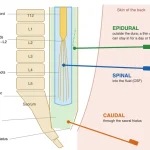
- Pain medicine is given as prescribed. Some operations also use a numbing block (such as a caudal block) that keeps the area comfortable for several hours.
- Most children are back to normal eating, play and sleep within a day or two, unless the operation itself needs longer. Your surgeon will tell you about the operation.
Contact your surgeon or anaesthetist the same day if your child has a fever, vomiting that continues, unusual sleepiness, new breathing noise, or pain that is not controlled.
Tips to help your child
- Explain the visit simply and honestly, in words suited to their age. Avoid saying it will not hurt at all.
- Bring a favourite toy, blanket or tablet for distraction.
- Follow the fasting instructions exactly, and tell the team about any cough, cold or fever.
- Stay calm. Children pick up on a parent’s anxiety.
Frequently asked questions
Will my child wake up during surgery?
No. Anaesthesia keeps a child asleep and pain-free throughout, and the team adjusts the medicines continuously. Awareness during surgery is extremely rare.
Can my child have sedation instead of anaesthesia for surgery?
No. Sedation suits short, painless procedures. Surgery needs the deep sleep, pain control and muscle relaxation of anaesthesia.
Should surgery be delayed if my child has a cough or cold?
Often, for planned surgery, yes. A recent cough or cold makes breathing problems under anaesthesia more likely. Tell the anaesthetist, who will decide whether to go ahead or wait a couple of weeks.
Can my child have more than one anaesthetic?
Yes, when each operation is needed. Concern is greatest for repeated, long exposures in very young children, so the team plans timing and avoids unnecessary exposures.
Why does my child have to fast if they cry from hunger?
An empty stomach lowers the chance of stomach contents reaching the lungs while your child is asleep. The fast is timed to be as short as is safe.
Questions you may want to ask at your visit
- Who will give my child’s anaesthetic, and do they treat children every day?
- Exactly when should my child stop food, milk and clear fluids?
- Will my child be put to sleep with a mask or a drip first?
- Can I stay until my child falls asleep?
- Will a numbing block be used for pain relief after the operation?
- Does my child’s history change the risks?
Consult your pediatric surgeon and anaesthetist early to understand your options.
Related pages
- Types of anaesthesia in children
- Inguinal hernia in children
- Hypospadias
- Undescended testis
- Pediatric general surgery
References
- American Society of Anesthesiologists. Practice guidelines for preoperative fasting and the use of pharmacologic agents to reduce the risk of pulmonary aspiration: updated report. Anesthesiology 2017;126:376-393.
- US Food and Drug Administration. FDA Drug Safety Communication: FDA review results in new warnings about using general anesthetics and sedation drugs in young children and pregnant women. December 2016.
- Davidson AJ, Disma N, de Graaff JC, et al. Neurodevelopmental outcome at 2 years of age after general anaesthesia and awake-regional anaesthesia in infancy (GAS): an international multicentre, randomised controlled trial. Lancet 2016;387:239-250.
- Sun LS, Li G, Miller TL, et al. Association between a single general anesthesia exposure before age 36 months and neurocognitive outcomes in later childhood (PANDA). JAMA 2016;315:2312-2320.
Clinic locations
- Manipal Hospital, Sarjapur Road, Bengaluru.
- Manipal Hospital, Electronic City, Bengaluru.
Appointments: +91 8217553785
This page is educational information and is not a substitute for individual medical advice. Drafted with AI assistance and medically reviewed by Dr. Koushik Herle.